Elusive Butterfly

“Across my dreams with nets of wonder, I chase the bright elusive butterfly of love.”  —Elusive Butterfly by Bob Lind.  1965.

Butterfly Mountain

Quite often, while I’m deeply engrossed in a news article or a gripping novel, I’m confronted with a word that derails my train of thought and causes it to sidetrack into that great stockyard of song titles from my past.  It happened twice with the same word today.  First, reading a New York Times article about the “elusive” goals of a certain political party.  Within minutes, a “one-word prompt” message shows up in my email, devised to inspire writers to create a story around today’s word, “elusive.”

I took that as a sign.  Both times the word appeared, my wandering mind sped like an out-of-control locomotive to the song Elusive Butterfly by folk singer Bob Lind.  I was in high school.  It wasn’t one of the “cool” songs I was supposed to like.  But I remember seeing Bob Lind perform it on Shindig or Hullabaloo, one of those 60s television teen shows, and pictured myself sitting on a stool, guitar in hand and stage lights all around as I watched Lind play and sing.

I still do that.  I did it again today.  And all it took was one word.  “Elusive.”  An apt description of my thoughts and how they’ve been shaped by music.   Now, back to my regularly scheduled thinking.

(This could have been the performance I watched so long ago:  Elusive Butterfly by Bob Lind.)


Drive

1984.  My marriage had broken down.
Who’s gonna tell you when it’s too late?

We’d just bought a big old house in an historic neighborhood.
Who’s gonna tell you things aren’t so great?

It was only two blocks from where I worked.
You can’t go on thinking nothing’s wrong.

Was there anyone in whom I could find comfort?
Who’s gonna drive you home tonight?

Divorce papers were signed on the auspicious date of March Fo(u)rth.
Who’s gonna pick you up when you fall?

Friends were conflicted by just who’s friend they should remain.
Who’s gonna hang it up when you call?

I only needed a shoulder to lean on.
Who’s gonna pay attention to your dreams?

Just someone who could listen for a moment.
And who’s gonna plug their ears when you scream?

I struggled to find meaning in my work.
You can’t go on thinking nothing’s wrong.

I brought home an old wooden desk and office chair that my dad once used.
But who’s gonna drive you home tonight?

Work was a burden.
Who’s gonna hold you down when you shake?

I desperately needed a friend.
Who’s gonna come around when you break?

I longed for a new companion.
You can’t go on thinking nothing’s wrong.

It was then she danced into my life.
Who’s gonna drive you home tonight?

She drove me home.  And stayed.

(Drive by the Cars.  Released July 23, 1984.  Words and music by Ric Ocasek.)
Listen to Drive by the Cars here:

Buy it here

Darkness, Darkness

Last night I was playing my guitar, plucking out and singing the old Youngbloods song, Get Together. You know how it goes.

“C’mon people now,
Smile on your brother.
Everybody get together,
Try to love one another right now.”

And this morning?  While those lyrics still represent a deep desire, they’ve been displaced temporarily by others from the same songwriter.

Darkness, darkness,
Long and lonesome,
Ease the day that brings me pain.
I have felt the edge of sadness,
I have known the depth of fear.
Darkness, darkness, be my blanket,
Cover me with the endless night.
Take away, take away the pain of knowing,
Fill the emptiness of right now…”
–Jesse Colin Young, Darkness, Darkness


Layers

Layers.  Stacks.  Platters.  Records.  Music.  It’s a word association game played in my head that invariably ends up leading to music.  To a classically trained musician, layers comprise the texture of music and determine whether the piece is monophonic, polyphonic or homophonic.  I’m not a classically trained musician, so my image of music layers is mainly limited to a stack of vinyl records sitting on a phonograph spindle waiting for their chance  on a spinning turntable to impress a pair of ears.

A surrealistic interpretation of a record stack was created for the cover of a Rolling Stones album, Let It Bleed.

If you examine all the layers stacked on that record-changer spindle you’ll likely see a cake plate, an open reel tape canister labeled “Stones – Let It Bleed,” a clock face, a pizza, a small tire and an elaborately decorated cake, complete with miniature figures of the band members.  Now those are some layers!

As for the music inside that cover?  Definitely melody-dominated homophonic layers of voices, guitars, drums, piano and more.  I’d love to write more, but I’m lying in bed under a layer of sheets, drifting off to sleep.  Sometimes there are just too many layers to think about and besides, You Can’t Always Get What You Want.

Clouds

Clouds

Ok.  I’m late.  I signed up for this WordPress thing called “The Daily Post,” the main purpose of which is to present blog writers with an inspiring word each day.  From there, authors are expected to become inspired enough by that word to write a captivating blog entry, preferably 250 words or less.  The word that inspired me, “clouds,” came up on the day we were preparing to travel 750 miles by car to another state.  Since then, a couple more days have passed.  I’ve had to ignore newer Daily Posts so I could think more about clouds.

Clouds was the first Joni Mitchell album I ever heard, but not the first time I’d heard her song from that collection, Both Sides Now, in which she mentions having “looked at clouds from both sides now.”  If you’ve flown, you’ve likely shared that exhilarating experience.  Judy Collins scored a hit with Both Sides Now in 1967, two years before Joni Mitchell released it herself on the Clouds album.

Looking at “both sides now” appears to be a major problem with a lot of people these days.  It’s especially an issue among those of us who’ve climbed aboard a political or religious bandwagon, parading around wearing blinders to avoid looking at different positions or beliefs held by others.  As the song goes on, “I really don’t know clouds at all.”  More folks might consider owning up to that… and then doing something to rectify it.

img_1814

Up Your Nose

Here’s a safety tip for the workshop.  The other day I was in the garage tossing some junk into a box marked “electrical components for disposal.”  These are the kind of small electronic items — computer gadgets, chargers, an old beard trimmer and the like — that we’re not supposed to be dumping in landfills.  They’re also not supposed to be mixed into the household recycling tote.  At the county courthouse parking lot, there is a regularly scheduled pickup for electronic component recycling.  Being a conscientious tree-hugger, I try to deep six this stuff where it belongs; mainly in someone else’s possession so I no longer have to deal with it.

One item, an old external computer hard drive, gave me pause.  What if there’s sensitive data stored on it just waiting to be lifted by some unscrupulous recycler?  So I set about disassembling it to reach the internal hard drive platters and destroy them.  The brushed aluminum housing and stand came off easily enough by removing a few screws.  I tossed those metal pieces into the regular recycling tote.  The hard drive itself was sealed in its own metal and hard plastic case.  Its metal cover was fastened with eight tiny screws, the heads not more than 1/16 inch across.  These were special “torx” head screws, characterized by a star pattern, instead of the more standard phillips or slotted type.

Not having a torx fitting small enough for such a tiny screw head, I chose to simply pry off the cover and break the screws.  I put on my safety goggles, picked up a tool and began prying up a corner.  The first screw head broke off easily and fell to the workbench.  Moving the pry bar to the next corner, I gave it a quick twist.  In a split second, the screw head snapped and took off like a missile.  Its trajectory, as if guided by nose hair technology, landed it deep inside my right nostril.  My first reaction was “don’t breathe!”  Thinking on my feet, the next breath taken was through my mouth, which was gaping open in disbelief.

Sparing you the unsavory details, I eventually was able to dislodge the pesky little missile which made a soft landing in a Kleenex tissue.  No blood or obvious damage was done.   Even this incident, traversing six degrees of separation at the speed of light, reminded me of a song.   If I hadn’t been able to remove the screw head myself, a medic wearing latex gloves might have had to retrieve it from my nostril with a surgical tool.  Vinny Barbarino’s classic “Up your nose with a rubber hose” from the 1970s TV show, Welcome Back, Kotter came to mind.  The opening theme song, Welcome Back, was written and performed by John Sebastian who, hopefully, never had either a rubber hose up his nose or a tiny screw head.

The happy ending of this story is accompanied by an equally happy song that you can hear by clicking on Welcome Back by John Sebastian.  Oh, wait.  I almost forgot the safety tip.  Here it is.  In addition to wearing safety glasses while at your workbench, you may also want to consider a surgical mask to protect nose and mouth orifices from rocketing debris.  A pair of earbuds connected to your mp3 player loaded with John Sebastian songs might help protect those ear canals too.

torx
Don’t screw around with your nostrils!

Summer’s here and the time is right…

On this first day of summer, with a full moon rising at the end of a long day, I’m reminded of two songs.  Each of them includes the identical phrase, “Summer’s here and the time is right for…”  But the similarities stop there.

Martha and the Vandellas brought us an uplifting Dancing in the Street in 1964 during the peak of the civil rights movement.  Most of us heard a good beat that was easy to dance to.  And dance we did, at times with great fervor!  But an undercurrent of racial tensions that summer led to the song being banned from some radio stations whose management feared the song fanned the flames of civil unrest and would lead to rioting in the street.  Nonetheless, Dancing in the Street climbed to number two on the Billboard Hot 100 chart.  It’s now one of 50 songs preserved by the Library of Congress in the National Recording Registry, a list of sound recordings that are “culturally, historically, or aesthetically important, and/or inform or reflect life in the United States.”

Four years later, the Rolling Stones provided a more strident take on summertime in their 1968 song, Street Fighting Man.  In place of dancing, the Stones sang about “marching, charging feet” and “the time is right for fighting in the street.”  The song became a passionate anthem of protest against the Vietnam war during my college years.  Street Fighting Man was covered by Rod Stewart on his debut solo album the following year.  When I attended his concert in Chicago not long after that, he refused to perform the song, fearing (perhaps with some justification) reprisals even two years after the Democratic National Convention debacle there.

On this first day of summer, which will it be for you?  Marching or dancing?  Whatever you choose, do it with fervor and with passion.

Note: Here are links to the two songs mentioned in the article.  Each will open in a separate tab in your browser:
Dancing in the Street by Martha and the Vandellas (Buy the mp3 download)
Street Fighting Man by the Rolling Stones (Buy the mp3 download)

My Glimpse of the Greatest: Muhammad Ali

The clock radio snapped on at six-thirty a.m. to the soothing jazz saxophone of David Sanborn.  It was a tune called The Dream, which seemed appropriate under the circumstances.  As the song and my dreamworld faded out simultaneously, the gentle voice of host Yvonne Daniels cooed that one WNUA contest entrant soon would be named winner of a fabulous prize.  The lucky listener only had to phone her at the number about to be announced.

Wiping sleep from my eyes, I mumbled “this could be my lucky day” to Sylvia during the ensuing string of radio ads.  It was the same thing I mumbled every morning since mailing in my entry form weeks before.  Returning from the commercial break, Yvonne announced my name!  I had until the end of the next song to phone in for a free round-trip plane ticket to anywhere in the the forty-eight contiguous states.

Now, what was that phone number again?  Fortunately, she repeated it before segueing into the song.  I fumbled around with the telephone handset, before managing to punch in the correct numbers.  Yvonne answered.  Upon verifying my identity and making some small talk, I became the happy recipient of one round-trip plane ticket with an expiration date matching the unopened carton of half-and-half in the fridge.  “Only one ticket?” Sylvia pouted.

With new jobs and unable to plan a vacation for both of us around a single plane ticket within the required time frame, I used it to attend a work-related conference in Washington, D.C. instead.  There are worse places to be in early March, I thought.  The Computers in Libraries conference was held at the Sheraton Washington and laid the groundwork for what eventually became my adjunct career, teaching librarians how to use the Internet.  A recurring theme of the conference, “the Internet is by no means a user friendly network,” was pretty accurate in 1992.

Sitting in the hotel lounge after a day of sessions, swapping library stories with a few colleagues, someone pointed to a man rushing toward us.  “Isn’t that Al Jarreau?”  she whispered.  We all turned our heads and he waved at us as he passed.  Naturally, I wondered where he was headed.  Rising slowly from my seat, I stretched my arms, yawned, and casually walked away from the waning conversation to follow Al into another part of the hotel complex.  Just a few years before, Sylvia and I had seen him in concert.  So, a sense of entitlement drove me to find out what he was up to now.

I meandered through a long, narrow hallway that opened into a lobby/reception area at the entrance to an auditorium visible through several sets of open double doors.  My eyes widened to scan a space packed mostly with black men and women in formal evening wear.  My jaw dropped upon spotting Jesse Jackson standing at a high-top table chatting with an entourage.  It may have dropped to the floor as a smiling, dreadlocked and darkglassed Stevie Wonder approached, escorted between two serious-looking men lightly touching his elbows.  When they were near enough, I blurted, “I love you, Stevie!”  “I love you, too!” he replied as his handlers nervously scurried him past me.

Leaning toward someone who looked like an outsider, I muttered, “What’s going on?”  He handed me a booklet.  It was a conference program for the Eighth Annual Communications Awards Dinner of the National Association of Black Owned Broadcasters (NABOB).  I quickly scanned the contents.  They were gathered to honor Michael Jackson with a Lifetime Achievement Award.  Holy crap!  Was Michael Jackson in this room?  As that thought lingered, several ushers appeared to be rounding up the celebrities.  In all honesty, many of these celebs looked familiar, but I couldn’t recall their names.  For sure, Michael Jackson wasn’t among them.

The distinguished guests filed into the auditorium where the ceremony was just beginning.  Still clutching the program booklet, I wandered over to one of the open doorways where a handful of fellow gawkers were positioned to catch as much of the action as possible.  The program began with a speaker making introductions.  Jesse Jackson and his young daughter Jacqueline were introduced, as were several other dignitaries and music executives.  A couple of politicos, Senator Bill Bradley and Representative Bill Richardson were among those introduced.  But the unexpected highlight for me was witnessing the introduction of Muhammad Ali.  He stood majestically and held up his outstretched hand to thundering applause.

Suddenly ushers appeared out of nowhere, closing the auditorium doors in our faces while affirming we could no longer watch the proceedings.  Michael Jackson, according to subsequent reports, accepted a lifetime achievement award in his trademark gloved hand.  He delivered what was allegedly his longest ever thank-you speech to date.  It comprised nineteen words.

Forget Michael.  I’d caught a glimpse of Ali, Heavyweight Champion of the World.  To have felt electrified in his presence for just those few seconds was worth a thousand words to me.

Author’s note: Somewhere in a cardboard storage box, I filed away that NABOB program booklet.  One of these days I hope to find it.

No Left Turn Deserves Another

After the Christmas break I was ready to begin my final semester in high school.  Friday arrived none too soon.  The entire student body was fired up for the big conference basketball game that evening between us, Beloit Catholic, and the conference leaders,  Marengo High School.  The afternoon pep rally provided a welcome reprieve from classwork.  A reprieve from the bitter cold that gripped the city would have been nice too.  Weather reports pointed to a modest break, predicting cloudy skies with temperatures ranging from 5 to 15 degrees for that January 5th, 1968.  Anything was better than the face-numbing, subzero wind chills of the previous few days.

Though loyal to my school, a lack of enthusiasm for the game could be measured in direct proportion to the excitement for my band, the No Left Turns, having been hired to play for the post-game dance.  It was hard to tell whether some students shared my excitement for the dance rather than for the game itself.  That was doubtful, with all the cheering and clapping between stirring speeches from Coach and one or two of his starting players.   The rally wound down after we all belted out the fight song, accompanied by a raucous pep band.  Someone, probably our principal, mentioned the dance during his closing remarks, much to my relief.

The No Left Turns had been practicing a few new songs and were restless to begin the new year with a gig worthy of showing them off.  We loaded up the trailer with our gear the night before, holding out the more cold-sensitive guitars and drums.  A Farfisa organ, various amplifiers, pedals, cymbals, lights and our P.A. system all were in there.  The P.A. speaker columns were recently acquired in a horse-trade with a competing band.  Whether the “new” ones were better than the speakers I traded away was an issue on which we didn’t all agree, and probably wouldn’t to this day.  The speakers we bartered were mounted in boxes that my Dad and I constructed when the band first got together two years before.  I’m pretty sure Tony was in agreement with me about the transaction.

The basketball game was wild.  Our 6-3 cagers won it in a hard-fought battle, defeating the 9-1 conference favorite by a score of 76-60.  As the post-game celebration diminished, individual members of the No Left Turns, along with a classmate, Tom, who helped haul and set up equipment, arrived separately to unpack the trailer.  Jim and I were the only band members from Beloit Catholic.  Cousin Mike attended Beloit Turner.  Bruce and Tony were from Beloit Memorial.  At that time, it was considered diverse just to hang out with guys from different schools.

We quickly emptied the trailer so it could be moved to a legal parking spot.  I asked a responsible looking adult where the band should set up.  He pointed to one end of the gym floor under a net and replied, “There.”  So, there is where we set up.
“We’ll have plenty of room to spread out.”  I said sarcastically.
“That’s for sure.” Mike chuckled.
Bruce discovered the gym floor was quite slippery.  “I’m not sure I can keep my drums from sliding around,” he said.
“Where’s your rug?” I questioned, making no attempt to hide my exasperation.
“Probably in your basement where I left it.  I’ll find one somewhere,” he snapped back, wandering off.
A few minutes later, Bruce returned with Tom, carrying a rolled up rug which they unfurled on the floor. They reset Bruce’s drums on it.
“Where’d you find that?”  Tony paused for a second and continued, “Is that the rug from between the double doors?”
“Yeah.”
“Cool!  It’s perfect!”

We played for the dance, pouring our hearts into every song we’d ever learned — The Letter, Incense and Peppermint, Come On Down to My Boat Baby, Light My Fire, and on and on — including a new one by Eric Burdon and the Animals, Sky Pilot.  Ours was a shaky arrangement for the song, without the dramatic sound effects and bagpipes.  But our stripped down version worked when we played it for our last number.  It was a pretty good gig with lots of kids dancing.

What  precipitated our breakup eludes me to this day.  I can’t help but think it had something to do with an allegation leveled against us.  The rug that Bruce borrowed from between the gym’s vestibule doors turned up missing.  The Beloit police had been called.  A uniformed officer showed up at my parents’ house Saturday afternoon.  He wanted to talk with me and “take a look” inside the trailer that was now parked back in the garage.  Having nothing to hide, I opened up the trailer doors.  He asked me to move a couple of things aside while he aimed his flashlight, but no rug was found.

After the squad car drove off, my mother continued the interrogation, embarrassed about a police car in the driveway.  I phoned Bruce to ask him about the rug.  “What rug?” he snarled.
“The one you used for your drums last night, dumb ass!”  Already I was seething.
“I left it on the gym floor.  Why?  Is someone pissed I didn’t put it back?”
“Not exactly.  The cops were just here searching the trailer ’cause they think we stole it!”

Our conversation deteriorated into typical teenage arguing and obscenities. I got fed up and shouted into the handset that the No Left Turns were washed up.  I was breaking up the band.  Maybe it was the police searching our trailer.  Maybe it was the unrelenting cold weather.  Maybe it was a mistake.

The following week, equipment in the trailer was returned to each rightful owner. The trailer was conveyed to cousin Mike’s house.  The P.A. system eventually was sold and proceeds were distributed among the original four band members.  The whole thing hurt me deeply. These guys were my friends and family.  A touch of teenage angst was evident in my letter to our agent, dated the following Monday.

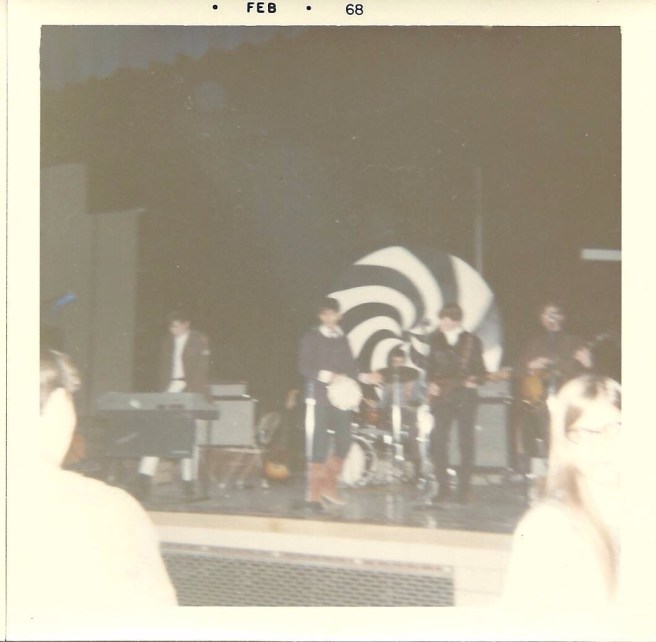
The photos and posters I requested were not returned.  The Aldrich Junior High gig already contracted for February 10th was fulfilled nicely by the Jaywalkers, our local competition for the previous two years.  Ironically, I’d recently joined them as lead singer.  Perhaps even more ironically, Bruce had joined as their new drummer.  That’s me in the fringed boots, slapping a tambourine, probably singing I Second That Emotion or Spooky.  And that’s Bruce directly in front of the hypno-wheel.  The others were Mike (not my cousin), Dean and Stan.  There is no rug in the picture.
Happy Birthday, Bob!

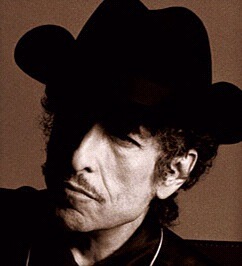
I’ve been listening to Bob Dylan since I was in high school.  Without Dylan I might never have found the nerve to try my hand at performing solo in college coffee houses, his songs making up a portion of my repertoire.  There is nothing I can write about this living legend that hasn’t been stated by others more proficient at wordsmithing than I.  Suffice it to say Bob Dylan has been the single biggest influence on my contemporary music appreciation than any other artist or band, including the Beatles.


At the risk of sounding like a eulogy derived from an IBM commercial, love may fade and time may pass, but your music and your message endure.  They will remain a part of me forever.  Happy 75th birthday, Bob!