Summer’s here and the time is right…

On this first day of summer, with a full moon rising at the end of a long day, I’m reminded of two songs.  Each of them includes the identical phrase, “Summer’s here and the time is right for…”  But the similarities stop there.

Martha and the Vandellas brought us an uplifting Dancing in the Street in 1964 during the peak of the civil rights movement.  Most of us heard a good beat that was easy to dance to.  And dance we did, at times with great fervor!  But an undercurrent of racial tensions that summer led to the song being banned from some radio stations whose management feared the song fanned the flames of civil unrest and would lead to rioting in the street.  Nonetheless, Dancing in the Street climbed to number two on the Billboard Hot 100 chart.  It’s now one of 50 songs preserved by the Library of Congress in the National Recording Registry, a list of sound recordings that are “culturally, historically, or aesthetically important, and/or inform or reflect life in the United States.”

Four years later, the Rolling Stones provided a more strident take on summertime in their 1968 song, Street Fighting Man.  In place of dancing, the Stones sang about “marching, charging feet” and “the time is right for fighting in the street.”  The song became a passionate anthem of protest against the Vietnam war during my college years.  Street Fighting Man was covered by Rod Stewart on his debut solo album the following year.  When I attended his concert in Chicago not long after that, he refused to perform the song, fearing (perhaps with some justification) reprisals even two years after the Democratic National Convention debacle there.

On this first day of summer, which will it be for you?  Marching or dancing?  Whatever you choose, do it with fervor and with passion.

Note: Here are links to the two songs mentioned in the article.  Each will open in a separate tab in your browser:
Dancing in the Street by Martha and the Vandellas (Buy the mp3 download)
Street Fighting Man by the Rolling Stones (Buy the mp3 download)

My Glimpse of the Greatest: Muhammad Ali

The clock radio snapped on at six-thirty a.m. to the soothing jazz saxophone of David Sanborn.  It was a tune called The Dream, which seemed appropriate under the circumstances.  As the song and my dreamworld faded out simultaneously, the gentle voice of host Yvonne Daniels cooed that one WNUA contest entrant soon would be named winner of a fabulous prize.  The lucky listener only had to phone her at the number about to be announced.

Wiping sleep from my eyes, I mumbled “this could be my lucky day” to Sylvia during the ensuing string of radio ads.  It was the same thing I mumbled every morning since mailing in my entry form weeks before.  Returning from the commercial break, Yvonne announced my name!  I had until the end of the next song to phone in for a free round-trip plane ticket to anywhere in the the forty-eight contiguous states.

Now, what was that phone number again?  Fortunately, she repeated it before segueing into the song.  I fumbled around with the telephone handset, before managing to punch in the correct numbers.  Yvonne answered.  Upon verifying my identity and making some small talk, I became the happy recipient of one round-trip plane ticket with an expiration date matching the unopened carton of half-and-half in the fridge.  “Only one ticket?” Sylvia pouted.

With new jobs and unable to plan a vacation for both of us around a single plane ticket within the required time frame, I used it to attend a work-related conference in Washington, D.C. instead.  There are worse places to be in early March, I thought.  The Computers in Libraries conference was held at the Sheraton Washington and laid the groundwork for what eventually became my adjunct career, teaching librarians how to use the Internet.  A recurring theme of the conference, “the Internet is by no means a user friendly network,” was pretty accurate in 1992.

Sitting in the hotel lounge after a day of sessions, swapping library stories with a few colleagues, someone pointed to a man rushing toward us.  “Isn’t that Al Jarreau?”  she whispered.  We all turned our heads and he waved at us as he passed.  Naturally, I wondered where he was headed.  Rising slowly from my seat, I stretched my arms, yawned, and casually walked away from the waning conversation to follow Al into another part of the hotel complex.  Just a few years before, Sylvia and I had seen him in concert.  So, a sense of entitlement drove me to find out what he was up to now.

I meandered through a long, narrow hallway that opened into a lobby/reception area at the entrance to an auditorium visible through several sets of open double doors.  My eyes widened to scan a space packed mostly with black men and women in formal evening wear.  My jaw dropped upon spotting Jesse Jackson standing at a high-top table chatting with an entourage.  It may have dropped to the floor as a smiling, dreadlocked and darkglassed Stevie Wonder approached, escorted between two serious-looking men lightly touching his elbows.  When they were near enough, I blurted, “I love you, Stevie!”  “I love you, too!” he replied as his handlers nervously scurried him past me.

Leaning toward someone who looked like an outsider, I muttered, “What’s going on?”  He handed me a booklet.  It was a conference program for the Eighth Annual Communications Awards Dinner of the National Association of Black Owned Broadcasters (NABOB).  I quickly scanned the contents.  They were gathered to honor Michael Jackson with a Lifetime Achievement Award.  Holy crap!  Was Michael Jackson in this room?  As that thought lingered, several ushers appeared to be rounding up the celebrities.  In all honesty, many of these celebs looked familiar, but I couldn’t recall their names.  For sure, Michael Jackson wasn’t among them.

The distinguished guests filed into the auditorium where the ceremony was just beginning.  Still clutching the program booklet, I wandered over to one of the open doorways where a handful of fellow gawkers were positioned to catch as much of the action as possible.  The program began with a speaker making introductions.  Jesse Jackson and his young daughter Jacqueline were introduced, as were several other dignitaries and music executives.  A couple of politicos, Senator Bill Bradley and Representative Bill Richardson were among those introduced.  But the unexpected highlight for me was witnessing the introduction of Muhammad Ali.  He stood majestically and held up his outstretched hand to thundering applause.

Suddenly ushers appeared out of nowhere, closing the auditorium doors in our faces while affirming we could no longer watch the proceedings.  Michael Jackson, according to subsequent reports, accepted a lifetime achievement award in his trademark gloved hand.  He delivered what was allegedly his longest ever thank-you speech to date.  It comprised nineteen words.

Forget Michael.  I’d caught a glimpse of Ali, Heavyweight Champion of the World.  To have felt electrified in his presence for just those few seconds was worth a thousand words to me.

Author’s note: Somewhere in a cardboard storage box, I filed away that NABOB program booklet.  One of these days I hope to find it.

No Left Turn Deserves Another

After the Christmas break I was ready to begin my final semester in high school.  Friday arrived none too soon.  The entire student body was fired up for the big conference basketball game that evening between us, Beloit Catholic, and the conference leaders,  Marengo High School.  The afternoon pep rally provided a welcome reprieve from classwork.  A reprieve from the bitter cold that gripped the city would have been nice too.  Weather reports pointed to a modest break, predicting cloudy skies with temperatures ranging from 5 to 15 degrees for that January 5th, 1968.  Anything was better than the face-numbing, subzero wind chills of the previous few days.

Though loyal to my school, a lack of enthusiasm for the game could be measured in direct proportion to the excitement for my band, the No Left Turns, having been hired to play for the post-game dance.  It was hard to tell whether some students shared my excitement for the dance rather than for the game itself.  That was doubtful, with all the cheering and clapping between stirring speeches from Coach and one or two of his starting players.   The rally wound down after we all belted out the fight song, accompanied by a raucous pep band.  Someone, probably our principal, mentioned the dance during his closing remarks, much to my relief.

The No Left Turns had been practicing a few new songs and were restless to begin the new year with a gig worthy of showing them off.  We loaded up the trailer with our gear the night before, holding out the more cold-sensitive guitars and drums.  A Farfisa organ, various amplifiers, pedals, cymbals, lights and our P.A. system all were in there.  The P.A. speaker columns were recently acquired in a horse-trade with a competing band.  Whether the “new” ones were better than the speakers I traded away was an issue on which we didn’t all agree, and probably wouldn’t to this day.  The speakers we bartered were mounted in boxes that my Dad and I constructed when the band first got together two years before.  I’m pretty sure Tony was in agreement with me about the transaction.

The basketball game was wild.  Our 6-3 cagers won it in a hard-fought battle, defeating the 9-1 conference favorite by a score of 76-60.  As the post-game celebration diminished, individual members of the No Left Turns, along with a classmate, Tom, who helped haul and set up equipment, arrived separately to unpack the trailer.  Jim and I were the only band members from Beloit Catholic.  Cousin Mike attended Beloit Turner.  Bruce and Tony were from Beloit Memorial.  At that time, it was considered diverse just to hang out with guys from different schools.

We quickly emptied the trailer so it could be moved to a legal parking spot.  I asked a responsible looking adult where the band should set up.  He pointed to one end of the gym floor under a net and replied, “There.”  So, there is where we set up.
“We’ll have plenty of room to spread out.”  I said sarcastically.
“That’s for sure.” Mike chuckled.
Bruce discovered the gym floor was quite slippery.  “I’m not sure I can keep my drums from sliding around,” he said.
“Where’s your rug?” I questioned, making no attempt to hide my exasperation.
“Probably in your basement where I left it.  I’ll find one somewhere,” he snapped back, wandering off.
A few minutes later, Bruce returned with Tom, carrying a rolled up rug which they unfurled on the floor. They reset Bruce’s drums on it.
“Where’d you find that?”  Tony paused for a second and continued, “Is that the rug from between the double doors?”
“Yeah.”
“Cool!  It’s perfect!”

We played for the dance, pouring our hearts into every song we’d ever learned — The Letter, Incense and Peppermint, Come On Down to My Boat Baby, Light My Fire, and on and on — including a new one by Eric Burdon and the Animals, Sky Pilot.  Ours was a shaky arrangement for the song, without the dramatic sound effects and bagpipes.  But our stripped down version worked when we played it for our last number.  It was a pretty good gig with lots of kids dancing.

What  precipitated our breakup eludes me to this day.  I can’t help but think it had something to do with an allegation leveled against us.  The rug that Bruce borrowed from between the gym’s vestibule doors turned up missing.  The Beloit police had been called.  A uniformed officer showed up at my parents’ house Saturday afternoon.  He wanted to talk with me and “take a look” inside the trailer that was now parked back in the garage.  Having nothing to hide, I opened up the trailer doors.  He asked me to move a couple of things aside while he aimed his flashlight, but no rug was found.

After the squad car drove off, my mother continued the interrogation, embarrassed about a police car in the driveway.  I phoned Bruce to ask him about the rug.  “What rug?” he snarled.
“The one you used for your drums last night, dumb ass!”  Already I was seething.
“I left it on the gym floor.  Why?  Is someone pissed I didn’t put it back?”
“Not exactly.  The cops were just here searching the trailer ’cause they think we stole it!”

Our conversation deteriorated into typical teenage arguing and obscenities. I got fed up and shouted into the handset that the No Left Turns were washed up.  I was breaking up the band.  Maybe it was the police searching our trailer.  Maybe it was the unrelenting cold weather.  Maybe it was a mistake.

The following week, equipment in the trailer was returned to each rightful owner. The trailer was conveyed to cousin Mike’s house.  The P.A. system eventually was sold and proceeds were distributed among the original four band members.  The whole thing hurt me deeply. These guys were my friends and family.  A touch of teenage angst was evident in my letter to our agent, dated the following Monday.
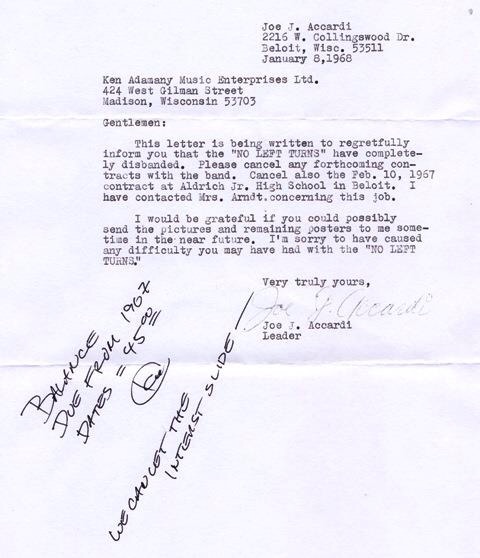
The photos and posters I requested were not returned.  The Aldrich Junior High gig already contracted for February 10th was fulfilled nicely by the Jaywalkers, our local competition for the previous two years.  Ironically, I’d recently joined them as lead singer.  Perhaps even more ironically, Bruce had joined as their new drummer.  That’s me in the fringed boots, slapping a tambourine, probably singing I Second That Emotion or Spooky.  And that’s Bruce directly in front of the hypno-wheel.  The others were Mike (not my cousin), Dean and Stan.  There is no rug in the picture.

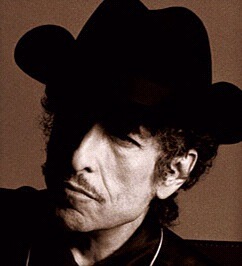
Happy Birthday, Bob!

I’ve been listening to Bob Dylan since I was in high school.  Without Dylan I might never have found the nerve to try my hand at performing solo in college coffee houses, his songs making up a portion of my repertoire.  There is nothing I can write about this living legend that hasn’t been stated by others more proficient at wordsmithing than I.  Suffice it to say Bob Dylan has been the single biggest influence on my contemporary music appreciation than any other artist or band, including the Beatles.


At the risk of sounding like a eulogy derived from an IBM commercial, love may fade and time may pass, but your music and your message endure.  They will remain a part of me forever.  Happy 75th birthday, Bob!

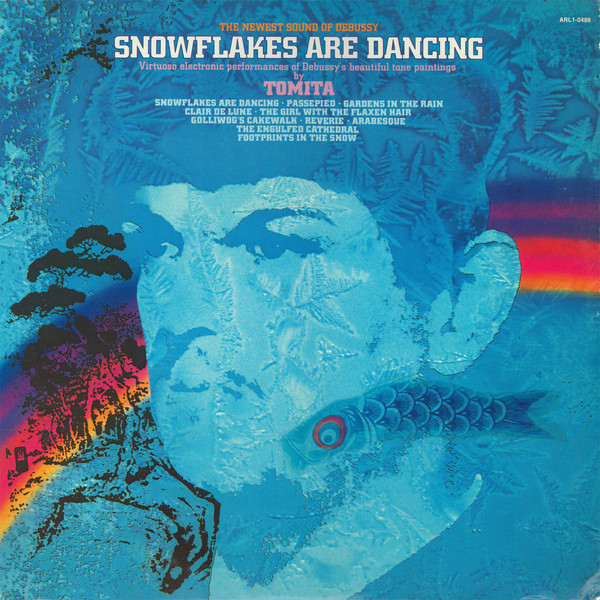
Snowflakes Are Dancing

It snowed in northern Wisconsin recently.  A bit unusual for mid-May, but not entirely unheard of.  I couldn’t help thinking those snowflakes, swirling in the chilly air, were dancing in tribute to yet another fallen artist.  Isao Tomita was a Moog synthesizer virtuoso who died at the age of 84 on May 11, 2016.  Forty-two years ago I was introduced to what became his most famous work.

Snowflakes Are Dancing

Snowflakes Are Dancing was an album of Claude Debussy’s “tone paintings” interpreted by Tomita on the Moog.  It wasn’t the first album of electronic music I’d heard.  Just before graduating high school, I was flipping through the “Psychedelic” bin in the record section of a local department store one day, searching for some unconventional music.  (I was already a fan of the Mothers of Invention.)  A shiny, silver cover bearing the title Silver Apples grabbed my attention.  It was recorded by a duo bearing that name and has since been cited as the first collection of experimental electronic music.

I plunked down a couple bucks and brought it home for a trial listen.  At first I didn’t care much for the pulsating, sometimes discordant, driving beat of synthesized sounds.  Nonetheless, I continued to play it occasionally just to hear something different.  Until my freshman year in college.  It was then the album was sold along with some others in what would be the first of several record purges over the next few years.  How much I regret purging some of those albums is a story for another time.

Most of my college listening (and occasional performing) involved serious folk-rock music, much of which carried with it a message of protest.  But a spark of interest in the strange and exotic sound of electronica was rekindled after college, fueled in part by movie soundtracks like A Clockwork Orange.  The film featured works performed on the Moog synthesizer by Walter Carlos.  (Later he became Wendy Carlos.)  Carlos had already gained notoriety with his 1968 Grammy-winning album, Switched On Bach, a collection of music by Johann Sebastian Bach played on the Moog.  He composed the electronic music for A Clockwork Orange three years later.

I picked up both albums and shortly after that acquisition, purloined one track from Switched On Bach to use as background music for a National Library Week promotional film I co-produced in the mid-seventies.  It featured card catalog drawers opening and closing on their own, created with stop-action animation effects that appeared to be in sync with the music.  The spot aired for a brief time on local cable television.  I wish I knew whatever became of it.

In the meantime, on November 2, 1973, I attended my first Moog synthesizer concert, promoted as a “multimedia performance of light, film and synthesized music.”  The soloist was Morton Subotnick, whose press kit highlighted his contribution of electronic effects for the soundtrack to 2001: A Space Odyssey.   It turns out my expectations were fulfilled neither in sight nor sound.  2001: A Space Odyssey it definitely was not.

A few months after that concert, undaunted by my disappointment with Subotnick’s performance, I acquired Tomita’s Snowflakes Are Dancing album. The atmospheric interpretations of Debussy’s works blew me away.  I loaned it to an amateur filmmaker friend who used it as the soundtrack to a short work he entered in an international film festival.  He had cast me in the lead role, so it was the least I could do in return.  After that, I played the LP until it wore out.  For years I’d be reminded of Tomita upon hearing a Moog synth in prog rock music.  Lucky Man, by Emerson, Lake and Palmer, for example.

Only recently did Snowflakes Are Dancing rejoin my playlist after noticing the recording among a listing of digital titles available online.  Who would have thought the electronic music produced forty-two years ago is now downloaded electronically and paid for electronically as well?  Far out!

Perhaps those late snowflakes in northern Wisconsin were dancing for Isao Tomita, who forever left his footprints in the snow and his fingerprints on the Moog.


Purple Reign

It was sad news to hear about the passing of Prince, yet another music icon to die in the past year or so who had a major impact on pop music.  I was a fan of Purple Rain, even to the point of recently learning to play an acoustic guitar arrangement of the song.

All the purple-tinted condolence photos, musical tributes by artists drenched in purple stage lighting, and articles mentioning one purple thing or another got me thinking.  How much music has been influenced by the color purple?

Well, the first thing that comes to mind is the novelty song Purple People Eater by Sheb Wooley.  It was a number one hit in 1958.  I always thought the “eater” was purple, but years later, after careful analysis of the lyrics, the creature himself may not be purple at all.  The creature says that “eating purple people… sure is fine.”  Then I guess most of us are safe, unless we hold our breath too long.

One of my sixties guitar heroes was Jimi Hendrix.  Upon hearing Purple Haze for the first time, I was immediately addicted to his music.  “Lately, things don’t seem the same…” is a mantra oft repeated in my brain since college graduation.

I heard Nino Tempo and April Stevens croon the song Deep Purple back in 1963.  That song was intended to be the B-side of Tempo and Stevens’ single titled I’ve Been Carrying A Torch For You So Long That It Burned A Great Big Hole In My Heart, which had the distinction of being the world’s longest song title.  Ironically, that distinction was purloined by Prince himself in 1984, whose B-side of When Doves Cry was titled 17 Days (the rain will come down, then U will have 2 choose, if U believe, look 2 the dawn and U shall never lose).  Whew!  Both lengthy titles were rivaled by the 1961 Ray Stevens song, Jeremiah Peabody’s Polyunsaturated, Quick Dissolving, Fast Acting, Pleasant Tasting Green and Purple Pills, that even contains the word “purple” in its title.

The other “Deep Purple” was the name of an English rock band whose 1968 album, The Book of Taliesyn, is the only recording of theirs I ever owned, four years before Smoke on the Water became a huge hit for them.

Now if I were to really stretch things, I might mention Moby Grape, a great San Francisco band from the late sixties whose only connection to the word purple is in the “grape” part of their name.  However, if I go down that road, I’d probably need to pour myself another glass of wine.  And though it would say red on the label, it would be purple in my glass… and hazy in my brain.

So for now, When the deep purple falls over sleepy garden walls, it’s time for bed.

self-1 purple


Pass the Wavy Gravy, please.

After I’d imagined myself as the next international rock star, only to have those hopes smacked down by reality, I moved on.  If only I’d moved in a slightly different direction, I might have ended up behind a microphone doing something other than speaking to yawning audiences of professional colleagues, expounding on topics of grave interest to my fellow librarians.

“You know, VisiCalc* will soon become the tool we use to manage entire library budgets and expenditures.” I’d prophesize from the podium.  Another gem was, “BITNET** is going to revolutionize the way we exchange information.”  Who knew I was such a prodigious prognosticator?

What I would rather have been doing during those speeches was spinning some records and talking about the bands whose songs I was playing.  So, it’s no surprise that sometime between the introduction of VisiCalc and the unleashing of the Internet, I’d submit my name to a local radio station contest in hopes of being selected to guest DJ a three-hour “classic rock” program.  Contestants were asked to submit a short list of songs they proposed to play.   To my surprise and delight, I was selected.  The person who called, suggested bringing enough music on vinyl or CD to fill three hours.  Counting commercial breaks, station IDs, local news and weather reports, it amounted to what seemed like only twenty minutes, though I’m sure it was quite a lot more.

On a crisp Saturday morning in October 1989, I was the guest DJ on that classic rock radio station in La Crosse, Wisconsin.  I brought along a crate load of LPs and CDs containing twenty-year old music to play and chat about on air with the show’s host.   About an hour into the program and much to my surprise, Wavy Gravy walked into the studio.  Wavy, whose real name is Hugh Romney, was the iconic “Hog Farm” operator at the Woodstock Music & Arts Festival in 1969.  A perpetual peace activist and counterculture clown, he had performed a stand-up show the previous night at the city’s fine arts venue, the Pump House.

The host interviewed him while while I contributed an occasional meaningless comment.  When the interview ended, I shook his hand and asked for an autograph.  Searching around for something on which to do the honor, Wavy spotted my Jimi Hendrix CD, Are You Experienced?   He grabbed it off the console, pulled out the cover insert and scribbled this on the back of it:

891014 Wavy Gravy autograph copyIt says, “‘Scuze me while I kiss the sky” and is signed “Wavy G.”  After he left the studio and we queued up another song, my host asked if I’d been to Wavy’s show the night before.  Embarrassingly, I had to respond that I hadn’t.  He smiled and then explained why Wavy chose those words from the song Purple Haze.  During one part of his act, when he was describing Jimi Hendrix’s early morning performance at Woodstock, he stepped in front of a loudspeaker, accidentally causing a couple seconds of screeching feedback.  He paused, looked up toward the rafters and uttered, “‘Scuze me while I kiss the sky,” resulting in wild cheers and applause from the audience.

Now, whenever I hear a Jimi Hendrix song, I think of meeting Wavy Gravy and wonder how in the world I was lucky enough to capture a personal moment with him.  I chalk it up to experience.  Mainly the one I missed.

“But first, are you experienced?  Have you ever been experienced?  Well, I have.” –Jimi Hendrix, Are You Experienced?

_________________________
*VisiCalc was the first spreadsheet computer program for personal computers, originally released for the Apple II. It is often considered the application that turned the microcomputer from a hobby for computer enthusiasts into a serious business tool, prompting IBM to introduce the IBM PC two years later. VisiCalc is considered the Apple II’s killer app. It sold over 700,000 copies in six years, and as many as 1 million copies over its history. (Wikipedia)

**BITNET was an early world leader in network communications for the research and education communities, and helped lay the groundwork for the subsequent introduction of the Internet, especially outside the US. (livinginternet.com)


Merle, Mozart and Me

I’m not what you’d call an avid country music fan.  Nor would I consider myself to be an opera expert.  The thing is, I like some country music.  I mean real country music — George Jones, Johnny Cash, Patsy Cline, Willie Nelson — not the pop music stuff that’s widely heard now.  (I don’t believe Taylor Swift is a country singer.)   I also enjoy some opera.  I prefer what’s called “bel canto,” Italian for “beautiful singing.”

My uncle was the first person I knew with a high-quality component stereo system comprised of an Acoustic Research (AR) turntable, a pair of AR speakers and a Sherwood receiver.  (I think it was a Sherwood.)  He was, and still is, a classical music aficionado.  Other than the occasional Maria Callas or Beverly Sills appearance on the Ed Sullivan Show, my exposure to opera and classical music in general had been limited at best.  My uncle Gaspare introduced me to the soaring dynamics of symphonic music and opera on that audio system.

But I was a mere teenager and my main musical interest gravitated to rock ‘n’ roll, thanks in part to a birthday present of a transistor radio that pulled in WLS in a scratchy-sounding way.  Sometimes I’d hear a country and western song that sounded pretty good, but I’d never admit it to my friends.  Likewise, I’d hear some version of Sabre Dance or Flight of the Bumble Bee and find out later it was really a classical music piece often used as background music by an acrobat or a juggler on TV.

One Merle Haggard song I recall hearing was performed by the Grateful Dead.  It wasn’t until I read the song credits on their live “Skull and Roses” album that I learned Mama Tried was Merle’s song.  That was when I first recognized “crossover” music — songs originating in one genre and becoming popular in another.  Years before, I’d heard Johnny Cash’s Ring of Fire on top-forty radio without making that crossover connection.  With Merle Haggard’s recent death, I was reminded of his songs I liked, including Today I Started Loving You Again, Mama’s Hungry Eyes and Mama Tried.

What does this have to do with Mozart?  The honest answer is — not much.  Except, all songs tell a story.  Stories of love, work and play, and of trials, gains and losses.  Opera is no different.  This past week, we attended a performance of Mozart’s opera, The Magic Flute.  It was sung in German, but there were projected English supertitles.  A far cry from the simple poetry and three-chord progression of country and western music, the more complex orchestral score and voices ranging from a sonorous baritone to a lilting soprano portrayed the same sentimental stories of searching for love and other tribulations, just in a more flamboyant way.

How fantastic would it be to slip the song Today I Started Loving You Again into the plot of an opera like The Magic Flute?  Or perhaps envision old Merle belting out Ein Mädchen oder Weibchen (A Girl or a Woman) during a set on the Ryman Auditorium stage?  Yeah, I guess either scenario would be pretty much out of the question.  But from a purely show biz perspective, a country singer with a black cowboy hat slung low toward his tinted glasses holding a guitar isn’t that far removed from an opera singer in a feathered headdress and mask holding a magic flute, is it?

Dalton Youth Center, Summer 1968

The tension was palpable as I stepped out of my dad’s Studebaker and walked toward the double glass doors of a building that looked more like a church than a teen center.  I’d already flicked my Winston cigarette butt through a rolled down window before pulling into the parking lot.  The sheet of paper I was clutching, a partially completed, standard musicians contract, caught the warm summer breeze and fluttered in my hand.  The guy in the brown suit and coke bottle glasses standing inside those doors was director of the Dalton Youth Center.  His name has been erased from my memory, probably the better for both of us.  We hadn’t yet agreed on a dollar amount for the gig he wanted my band to play there.

It was “my band,” because I was the one with a pad of blank contract forms.  We called ourselves “Volume One,” named after a bookstore in Piper’s Alley off of Wells Street in Old Town Chicago.

When the No Left Turns broke up just after the new year, I joined rival band, the Jaywalkers, along with Bruce, our drummer.  The Jaywalkers had just lost their drummer, Dick, to our other rival band, the Marauders.  Dick had also been the lead vocalist.  Suddenly we’d all become free agents.  So Bruce drove the tempo and I took over the vocals for the Jaywalkers.

The new Jaywalkers played some pretty good gigs before two things happened.  Stan, the lead guitarist, left to join the Marauders.  They were certainly living up to their name.  About that time I became more involved in the high school musical, West Side Story, so play rehearsals were impinging on band rehearsals .  Upon announcing I couldn’t play any gigs over the next few weekends, Bruce threw down his sticks and abruptly quit, exclaiming “This is bullshit!”  That was the end of the Jaywalkers and the last I ever saw of Bruce.

With the musical and graduation finally behind us, ex-Jaywalkers Mike, Dean and I wanted to play more music during that summer.  We recruited ex-No Left Turns Tony, for lead guitar.  Then another classmate named Joe, who played trumpet and could sing harmony joined up.  Searching for a drummer, we learned that Dick (remember Dick?)  had been “released” by the Marauders.  So we asked him to join us.  Now we numbered six, and four of us could alternate singing lead and harmonizing.  Mike played rhythm guitar and organ, Dean played bass.  Two Joes now fronted the band.  And thus, Volume One was born.  We played four gigs that summer.  Dalton Youth Center was the first.

The brown-suited guy met me inside the double doors.  We exchanged greetings and he invited me to his office where I sat across from him.  Leaning back in his executive chair, he put his brown wingtips up on the desk, crossed at the ankles, and explained the gig.  He wanted a “break band” to play between sets of the One-Eyed Jacks from Chicago, the night’s headliners.  I told him we needed a hundred and fifty dollars to play three break sets.  He laughed and counter-offered an even hundred.  Thinking out loud, I said, “Look, we have six guys in the band and that’s not even twenty bucks apiece.”
“Oh,” he grinned.  “If you want twenty each, then let’s make it a hundred and twenty bucks.’
Realizing my next counter offer of thirty dollars each times six would be more than what I’d initially proposed, I quickly agreed.

We shook hands, completed the contract and signed it.  I kept the original and handed him the carbon copy.  Leading me out of his office and into the dance hall, he pointed up to the balcony and said, “That’s where you guys will set up and play from.”  Having recently graduated from high school, I was compelled to correct his grammar and advise him not to end a sentence with a preposition, but I held my tongue.  It was a bit discouraging to discover we’d be lugging our gear up a flight of steps and setting up there just to play three, twenty-minute sets.  On the other hand, we didn’t know many songs.  So it all evened out.

On the night of the gig, we arrived early to carry our stuff up to the balcony and tune up.  Then we watched as the One-Eyed Jacks set up and tuned.  Before kicking it off, they invited us to compare set lists.  After a brief discussion they instructed us not to play Purple Haze and Sunshine of Your Love because those were songs in their sets.  Reluctantly, and a bit annoyed, we agreed.

The One-Eyed Jacks were pretty damned good that night.  They even played Good Vibrations, the only band other than the Beach Boys I’ve ever heard play that song to this day.  But their versions of Purple Haze and Sunshine of Your Love were no better than ours.  That was the message our seriously bruised egos were transmitting to our ears.  Given that we probably would never share another venue with the One-Eyed Jacks, we sneaked both songs into our last set, finishing with a blistering Purple Haze, overladen with fuzz tone and wah-wah effects.

Volume One never heard any more from the One-Eyed Jacks.  We broke down our equipment, carried it out to our vehicles and convoyed over to the Hollywood Drive-In to spend some of that twenty dollars each on fish and chips dinners.  By the way, the guy in the brown suit thought we were “pretty good.”  So did we.

Rockin’ My Valentine

Quick!  Name your top ten favorite rock ‘n’ roll love songs.  Got ’em?  Okay, here’s my list.  Not in any particular order.  It’s a mix of sad and happy (sappy?), rock and soul, mostly dusty old tunes.

1.  God Only Knows – The Beach Boys.  I truly believe in my heart this is among the best songs ever written. Period.  “I may not always love you.  But long as there are stars above you, you never need to doubt it.  I’ll make you so sure about it.  God only knows what I’d be without you.”  I rest my case.

2.  Crying – Roy Orbsion.  A masterpiece of pure melancholy.  This guy runs into an old flame and it stirs up a firestorm of emotions in his still broken heart.  “Yes, now you’re gone and from this moment on, I’ll be crying, crying, crying, crying.  Yeah crying, crying, over you.”  Holy crescendo, Batman!  By the way, Rebekah Del Rio’s cover of Crying (Llorando) from David Lynch’s film Mulholland Drive is hauntingly awesome.

3.  Something – The Beatles.  From the moment the Beatles sang Love Me Do until their 1970 breakup, they were all about love.  Nothing bearing the Lennon/McCartney writing credit quite matches up to George Harrison’s heartfelt homage to his wife, Patti Boyd.  Not even Yesterday.  Just my humble opinion.  “Something in the way she moves attracts me like no other lover…

4.  Wild Horses – The Rolling Stones.  Maybe they didn’t get much satisfaction, but when they did, they didn’t want to let it go.  And this song is a reflection of that and so much more.  “Wild horses couldn’t drag me away.  Wild, wild horses.  We’ll ride them someday…”  You can almost feel those horses pulling on your heartstrings.

5.  In Your Eyes – Peter Gabriel.  If eyes are the gateway to your soul, then this song is the gateway to your heart.  I  prefer the eleven minute live version on his Secret World Live album.  “In your eyes I see the light, the heat in your eyes.  Oh, I want to be that complete.  I want to touch the light, the heat I see in your eyes…”  The Jeffrey Gaines acoustic cover of In Your Eyes is a masterpiece to behold.

6.  I Want You – Bob Dylan.  I confess to having an affair of the heart with Dylan and his music.  In a recent commercial, “Your major themes are time passes and love fades,” IBM’s artificial intelligence software dubbed Watson tells Bob after a computer analysis of his songs.  “I want you.  I want you.  I want you, so bad.  Honey, I want you.”  Blonde On Blonde contains the definitive version, but the oft-scorned Bob Dylan at Budokan interpretation reveals a wistful Dylan accompanied only by ethereal flute and organ.

7.  Moondance – Van Morrison.  “Van the Man” captures the perfect autumn evening, perhaps with a campfire and a shared bottle of Pinot Noir.  I know.  I’ve been there.  Guitar in hand, serenading my sweetheart.  She knows.  She wouldn’t let me forget.  “It’s a marvelous night… Can I just have one more moon dance with you, my love?  Can I just make some more romance with you, my love?

8.  My Girl – The Temptations.  One of the great prom songs.  Just about every garage band I knew played their hearts out on My Girl.  Some even tried to copy the Temptations’ choreography.  Most failed.  “I’ve got all the riches, baby, that one man can claim.  I guess you’d say, what can make me feel this way?  My girl.  Talkin’ ’bout my girl.

9. All I Have To Do Is Dream – The Everly Brothers.  A guilty pleasure shared between my sweetheart and me.  Oh, those long days and weeks between our rendezvous.  “When I want you in my arms.  When I want you and all your charms.  Whenever I want you, all I have to do is dream.  Dream, dream, dream.”  Living two hundred miles apart can leave you dreaming your life away.

10.  Let’s Stay Together – Al Green.  Arguably the last of the great soul singers, Al Green transforms any cozy evening in front of a warm, glowing fireplace into a romantic tryst in Paris.  When no one else can warm your heart, Al can.  “Ooh, baby.  Let’s, let’s stay together.  Loving you whether times are good or bad, happy or sad.”  Years after the original version, Tina Turner made it her own as well.  Al and Tina.  Ooh, baby…

❤️  What are your favorite love songs?  ❤️